

Delmarva’s coastal environment is not your typical backyard. Many homeowners mistakenly assume lawn care is the same everywhere, but the Delmarva Peninsula (encompassing Delaware and the Eastern Shores of Maryland and Virginia) has distinct climate and soil conditions that demand a specialized approach.
Located in the northern half of the “turf transition zone,” Delmarva gets the worst of both worlds – winters cold enough to stress warm-season grasses, and summers hot and humid enough to stress cool-season grasses. Add in salty sea breezes, frequent coastal winds, and sandy, fast-draining soils, and it’s clear that a one-size-fits-all lawn regimen won’t cut it here.
Below, we’ll explore why proper, region-specific lawn care is so crucial for a healthy yard in Delmarva’s coastal climate.
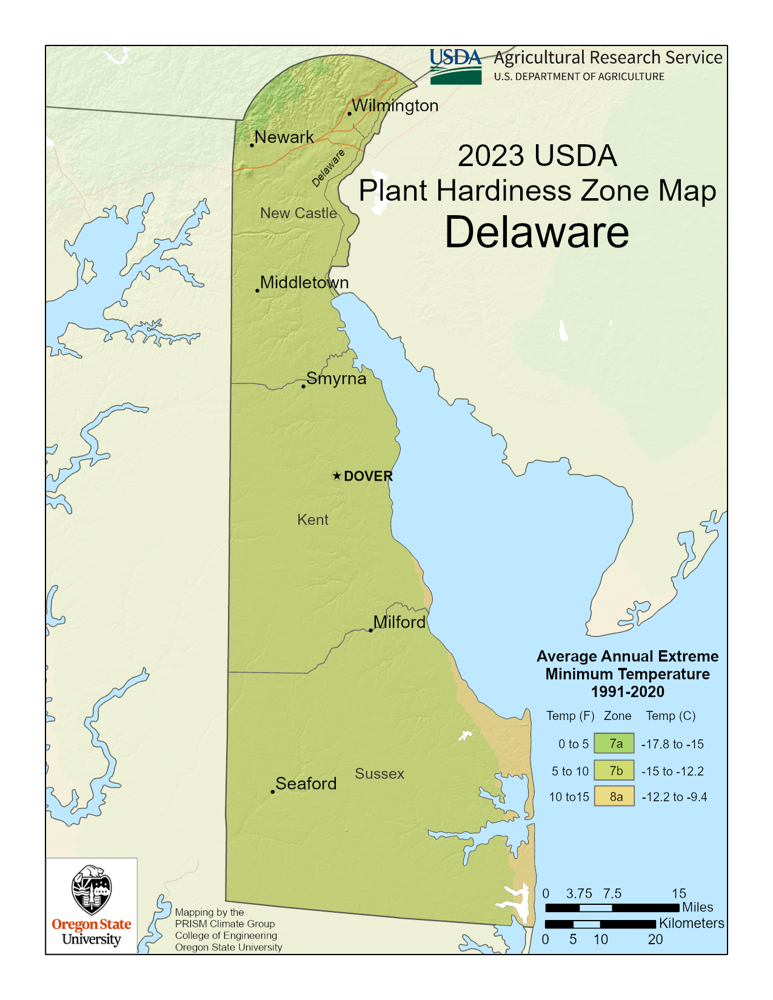
The USDA Plant Hardiness Zone Map for Delaware shows the Delmarva region spans zones 7a to 8a, reflecting relatively mild winters. However, hot, humid summers and sandy coastal soils create unique challenges for lawns.
Key Takeaways:
- Delmarva’s Unique Environment: The peninsula’s hot, humid summers and mild winters (USDA Zones 7–8) place it in a transition zone, meaning common grasses may go dormant or suffer seasonally. Coastal conditions (salt air, strong winds, sandy soils) further set Delmarva apart from inland regions.
- Soil and Water Challenges: Sandy coastal soils drain quickly and leach nutrients, requiring soil amendments and careful watering. High humidity and poor soil can invite fungal diseases if lawns are not properly managed.
- Best Lawn Practices: Success in Delmarva starts with choosing the right grass species (e.g. turf-type tall fescue or zoysia) and following seasonal care routines – deep, infrequent watering, fall-focused fertilization, regular aeration, and pH/soil testing for optimal nutrient balance.
- Common Problems & Solutions: Coastal lawns often face brown patch fungus, salt damage, and drought “burn”. Solutions include proper mowing and irrigation to prevent fungus, flushing salts from soil after storms, and overseeding or treating pest infestations with guidance from local extension recommendations.
- Professional Care Advantages: Given the demanding climate and environmental regulations, professional lawn care (like Shorescapes) can tailor practices to local conditions – ensuring a lush, resilient lawn while protecting the Bay and coastal ecosystem.
The Challenges of Delmarva’s Coastal Climate
Delmarva’s coastal climate presents a triple whammy of lawn-care challenges: intense humidity, salty ocean air, and sandy, nutrient-poor soils. Understanding these factors is the first step to caring for your lawn the right way in our region.
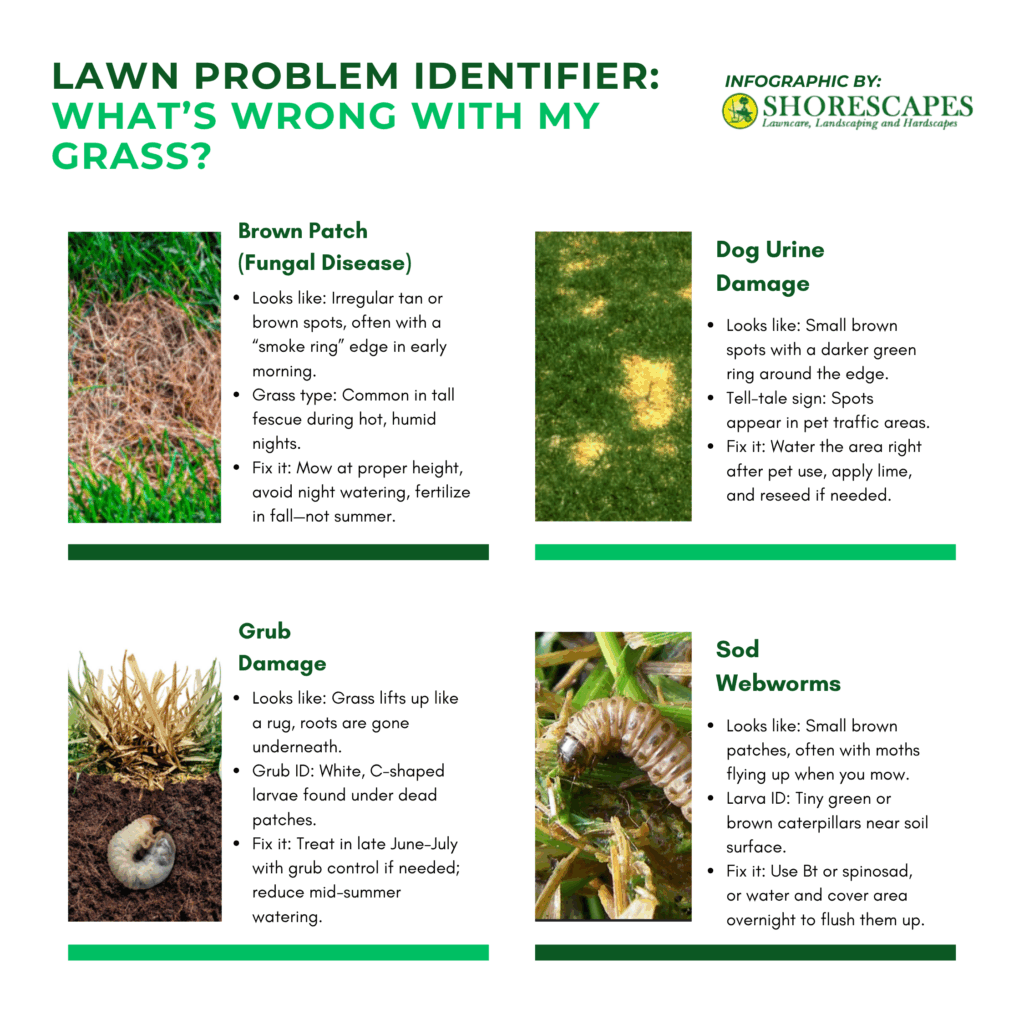
- Heat & Humidity – A Breeding Ground for Fungus: Summers on the peninsula are not only hot but extremely humid, with abundant dew and moisture in the air. That moisture is a magnet for turf diseases. A very common issue is brown patch (Rhizoctonia fungus) on tall fescue lawns. It strikes in mid-summer when days and nights are warm and muggy, causing irregular brown patches of grass.
High humidity means leaf surfaces stay wet longer (especially with evening irrigation or heavy dew), encouraging fungal spores to germinate. Lawns in Delmarva can literally “melt out” with disease if watered improperly – one reason timing irrigation for early morning is critical (watering in the evening leaves grass wet overnight, which encourages disease). - Salty Air, Storms, and Wind Exposure: Being surrounded by the Chesapeake Bay and Atlantic Ocean, much of coastal Delmarva is exposed to salt spray and strong winds, especially during nor’easters and summer storms. Salt can have a “burning” effect on grass blades – you might notice lawn edges or patches turning brown after ocean storms or even along roads where salt is used in winter. During a major storm event, winds can drive salty air inland, scorching plant leaves on the windward side.
- Sandy, Fast-Draining Soils (and Why Aeration & Amendments Matter): Much of the Delmarva Peninsula sits on ancient coastal plain sediments. Sandy or sandy-loam soils are predominant, especially near the coastline. If you dig in your yard and find it feels gritty and doesn’t hold water, you’re not alone – that’s typical Delmarva soil. The good news is sand drains rainwater rapidly (reducing puddles or runoff); the bad news is it “drains” nutrients too, a process called leaching. Key nutrients like nitrogen can wash through the root zone before plants use them.
The key to a healthy sandy lawn is building better soil. Core aeration helps reduce compaction and opens space for nutrients and compost to reach the roots. Adding organic matter (like compost) improves water and nutrient retention, boosts soil health, and supports better turf growth.
In Delmarva, soils are often acidic and low in nutrients. A soil test can tell you if lime is needed to raise pH. The bottom line? Healthy grass starts with healthy soil—so regular aeration and annual compost topdressing are essential for success in sandy conditions.
Best Lawn Care Practices for Delmarva Homes
Now that we understand the challenges, let’s look at the best practices that address those challenges head-on. From picking a resilient grass type to timing your fertilization right, these practices are tailored for Delmarva’s climate and soils. Adopting these will set your lawn up for success where a generic approach might fail.
1. Choose the Right Grass Type: For Delmarva lawns, turf-type tall fescue is the top pick—it’s drought-tolerant, disease-resistant, stays green most of the year, and thrives in full sun or partial shade. Zoysiagrass is great for hot, dry summers and low maintenance but goes dormant and turns brown from fall through early spring. Skip bluegrass, ryegrass, and fine fescues as primary options—they struggle in our climate and need more care. Choose fescue for year-round performance, or zoysia if you want a tough summer lawn and don’t mind the winter downtime.
2. Water Wisely – Deep and Infrequent: How you water your lawn in Delmarva matters just as much as what you plant. Aim for deep, infrequent watering—about 1 inch per week—in one or two early morning sessions to build deep roots and avoid disease. Avoid daily light sprinkling, which weakens drought resistance. In sandy soils, split watering into two half-inch sessions to reduce runoff.
During hot summers, don’t panic if your fescue browns—it’s going dormant, not dying. Let it rest unless there’s a true drought, then water just enough to keep crowns alive. And if you’re near the coast using well or pond water, watch for salt buildup—flush it out occasionally and avoid watering during salty storms. Smart watering = healthy, resilient lawn.
3. Feed Your Lawn – Fertilizing your Delmarva lawn is essential—but timing and precision matter to protect both your grass and nearby waterways. For cool-season grasses like tall fescue, focus on fall feedings: one solid dose in early fall (Sept–Oct) to build roots, and a lighter one in late fall to prep for winter.
Skip heavy spring or summer fertilizer to avoid disease-prone growth. For warm-season grasses like zoysia, fertilize in late spring and summer, stopping by August. Always soil test first—it tells you exactly what your lawn needs (often just nitrogen and potassium). Use slow-release or organic fertilizers to avoid runoff and overfeeding, and apply lime only if a test shows low pH. Smarter feeding = healthier lawns and cleaner bays.
4. Test and Adjust Your Soil: Soil testing every 2–3 years (or before major lawn projects) is a smart move—it tells you exactly what your lawn needs and prevents over-fertilizing. Delmarva’s soil can vary yard to yard, so test from multiple areas. University extension services make it easy and affordable, with clear reports and recommendations.
Also watch your soil’s condition: if it’s hard or water runs off quickly, it may need core aeration (best done in fall for cool-season or late spring for warm-season grass). Aeration relieves compaction, helps with thatch, and improves seed and fertilizer uptake. Thatch—dead roots and stems—should be kept under 0.5″. Zoysia lawns may need dethatching every few years; fescue rarely does. If your lawn feels spongy or dries quickly, it’s time to aerate or dethatch. Simple fixes, big results.
5. Mowing and Other Maintenance: Proper mowing is key to lawn health in Delmarva. For tall fescue, mow at 3–4 inches to shade the soil, conserve moisture, and reduce weeds—never cut more than one-third of the blade at a time.
Zoysia prefers 1.5–2 inches for a tight look, but only if your lawn is smooth and level. Avoid scalping, especially in summer, and always use sharp blades to prevent ragged cuts and disease. Don’t forget routine care: mulch or rake fall leaves, avoid walking on wet soil to prevent compaction, and try grasscycling—leaving clippings on the lawn returns nutrients, improves soil, and cuts fertilizer needs by up to 25%.
Common Lawn Problems in Coastal Environments (and How to Solve Them)
Fungal Diseases
- Brown patch (fescue) and large patch (zoysia) are common in warm, humid weather.
- Avoid night watering and summer over-fertilization.
- Mow at proper height and improve airflow.
- Most recover on their own by fall—no fungicides needed for home lawns.
Salt & Heat Stress
- Salt from storms or roads causes browning—flush with deep water ASAP.
- Avoid fertilizing salt-stressed areas.
- Heat/drought stress causes dormancy, not death—water deeply if needed, and mow higher in summer.
Pet Urine Spots
- Rinse area with water immediately.
- Reseed dead patches if needed; lime can help with acidity.
Weeds
- Thin lawns invite crabgrass, nutsedge, spurge, and clover.
- Apply pre-emergent herbicide in early spring (or mow tall to shade soil).
- Spot-treat or hand-pull as needed; overseed in fall to crowd out weeds.
- Keep a chemical-free buffer near waterways to protect the Bay.
Grubs & Lawn Pests
- White grubs eat roots—avoid overwatering in midsummer when beetles lay eggs.
- Use summer grub control (imidacloprid or similar) if needed.
- Sod webworms and armyworms chew blades—look for moths, treat with Bt or spinosad.
- Chinch bugs thrive in hot, dry lawns—improve watering, reduce thatch, and spot-treat only if necessary.
General Tips
- Scout regularly for early signs: brown patches, birds pecking, moths flying, etc.
- Most issues are manageable with good lawn care and timely action.
- Extension offices and pros can help with ID and treatment when needed.
Here’s a quick guide to spotting the most common lawn problems in Delmarva:

Conclusion: Why Professional Care is Important in Delmarva’s Climate
Lawn care in Delmarva’s coastal climate is anything but one-size-fits-all. From extreme summer heat to winter Nor’easters, our region demands more than just basic maintenance—it requires a thoughtful, localized approach. The key is choosing the right grass for your microclimate, adjusting watering to match our sandy soils and high humidity, and supplying nutrients that our native soils often lack.
Many homeowners assume lawn care is universal, but that mindset often leads to disappointment. A single mistake—like the wrong fertilizer or missed watering after salt spray—can set your lawn back for months. That’s why professional services like Shorescapes can make a world of difference. Local experts understand Delmarva’s climate zones, soil variability, pests, and regulations. They tailor fertilization based on soil tests, apply treatments precisely, and stay compliant with coastal environmental rules.
More than just know-how, they offer peace of mind: catching issues early, managing turf proactively, and delivering consistent, standout results. In a region where the lawn is part of both your curb appeal and the larger Bay-friendly ecosystem, expert guidance pays off. A well-maintained lawn filters pollutants, reduces erosion, and creates a cooler, greener space for your family to enjoy. With the right strategy and support, thriving turf in Delmarva isn’t just possible—it’s achievable.
Contact Shorescapes for Expert Coastal Lawn Care
Is your lawn struggling with the Delmarva heat, salt, or sandy soil? Are you unsure about the right grass or the correct timing for care? Shorescapes is here to help. As a locally based lawn and landscape care provider, we specialize in Delmarva’s coastal climate and understand its challenges first-hand. Our team can assess your lawn’s specific needs – from soil testing your property to identifying pest or disease issues – and create a tailored plan to give you a lush, healthy lawn without the guesswork.
Don’t leave your lawn’s success up to chance. Reach out to Shorescapes today for a consultation or service quote. We’ll work with you to implement all the best practices discussed – the right grass selection, proper fertilization schedule, aeration and seeding, environmentally conscious pest control, and more – so you can enjoy a vibrant green lawn year-round, even in the face of coastal conditions. Let us handle the hard work and science behind the scenes, while you get to relax and take pride in your beautiful yard.
Contact us to schedule a lawn assessment or to learn more about our seasonal maintenance programs. With Shorescapes as your partner, you’ll quickly see why proper lawn care matters in Delmarva’s climate – and how much of a difference it makes. Your lawn will thank you, and so will the local environment. We look forward to helping you achieve the lawn of your dreams on the Delmarva coast!
FAQs
Q1: Do I really need a different lawn care approach in Delmarva’s coastal climate?
A: Yes—Delmarva lawns need region-specific care. Our hot, humid summers, mild winters, salty air, and sandy soils make lawn care here different from cooler, less sandy regions. What works in New England (like Kentucky bluegrass and light watering) often fails here.
Q2: What are the best grass types for lawns on the Delmarva Peninsula?
A: For most Delaware-area lawns, turf-type tall fescue is the top choice. It’s a cool-season grass that stays green most of the year, handles drought well, and tolerates both sun and part shade. If summer performance is your priority and you don’t mind brown grass in winter, zoysiagrass is a great warm-season option—low maintenance and thrives in heat.
Q3: How often and when should I water my lawn in this area?
A: Aim to give your lawn 1 inch of water per week during dry spells, applied deeply (soaking 4–6 inches of soil) rather than frequently. Water in the early morning to reduce disease risk—avoid evening watering, which encourages fungus. In cooler seasons, natural rainfall is often enough; irrigation is mostly needed in summer or drought.
Q4: I’m noticing brown patches in my lawn during the summer – is this due to fungus, and what should I do about it?
A: Brown patches in summer could be fungus, heat stress, or other local issues. If patches are circular with a dark “smoke ring” and greasy blades, it’s likely Brown Patch fungus—common in fescue during humid midsummer. If the grass is evenly tan and dry without edges, it’s probably heat/drought stress. Also check for pet urine or shade from trees, which cause localized browning.
Q5: The soil in my yard is very sandy and my lawn struggles – can I really get a lush lawn in such soil, and how?
A: You can have a great lawn on sandy soil—it just needs the right care. Sandy soil drains fast and lacks nutrients, so build it up over time with compost and regular topdressing. Use slow-release fertilizer or apply light doses more often to avoid leaching. Water in smaller amounts more frequently (like ½ inch twice a week), since sandy soil can’t hold much at once.