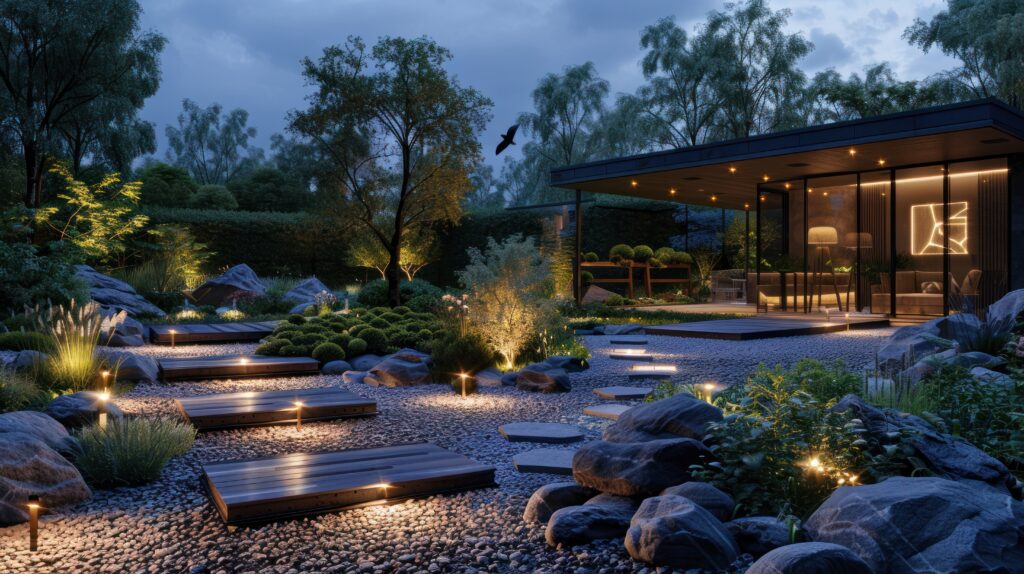
Adding low-voltage lighting to your yard is a simple way to boost your home’s curb appeal. It can make your outdoor spaces look beautiful, improve safety, and create a warm, inviting atmosphere. But with so many options out there, how do you choose the right low-voltage lighting for your yard? Don’t worry—we’ve got you covered. Let’s go over the basics of low-voltage lighting and how to pick the best lights for your yard.
Why Choose Low-Voltage Lighting?
Low-voltage lighting is a popular choice for outdoor spaces because it’s energy-efficient, safe, and easy to install. Unlike regular 120-volt lights, low-voltage lights use a transformer to reduce the power to 12 volts, making them safer to work with around water, plants, and people. They’re also more affordable to run since they use less electricity.
With low-voltage lighting, you can create different effects in your yard, like highlighting a garden, lighting up pathways, or adding a glow to your deck or patio. Plus, the variety of fixtures and designs means you can find the perfect lights to match your home’s style.
Types of Low-Voltage Lights
Before you choose the right lighting for your yard, it’s important to know about the different types of low-voltage lights available. Each type serves a unique purpose and creates a different look. Here are some common types of low-voltage lights to consider:
1. Path Lights
Path lights are small fixtures placed along walkways, driveways, or garden paths. They provide a soft, even glow that lights up the ground, helping guide your steps at night. Path lights not only make your yard safer to walk through but also add a welcoming touch to your home.
These lights come in many styles, from sleek modern designs to classic lantern shapes. Choose path lights that blend in with your landscape and fit your overall outdoor decor.
2. Spotlights
Spotlights, or accent lights, are used to highlight specific features in your yard, like trees, statues, or architectural details. They provide a focused beam of light, drawing attention to whatever you want to showcase.
When using spotlights, consider the brightness and angle of the light. A narrow beam creates a dramatic effect, while a wider beam provides softer, more even lighting. Spotlights are perfect for adding depth and interest to your landscape.
3. Floodlights
Floodlights are larger, brighter lights that cover a wide area. They’re great for lighting up large spaces like driveways, patios, or lawns. Floodlights can also be used to improve security by lighting up dark areas around your home.
If you’re looking for a more subtle effect, choose floodlights with a lower brightness level. For security purposes, motion-sensor floodlights are a good option, as they only turn on when movement is detected.
4. Deck and Step Lights
Deck lights are small fixtures designed to be installed on decks, stairs, or railings. They add a soft glow to your outdoor living areas, making them safer and more inviting. Step lights are perfect for illuminating stairs and walkways, reducing the risk of trips and falls at night.
Choose deck and step lights that match your deck’s style. For example, sleek, low-profile lights work well on modern decks, while classic lantern-style lights suit traditional designs.
5. In-Ground Lights
In-ground lights, also known as well lights, are installed flush with the ground to provide uplighting. They are ideal for highlighting trees, shrubs, or other landscape features without drawing attention to the light source itself.
These lights are also great for lighting up driveways or pathways, as they’re sturdy and can handle foot or vehicle traffic. In-ground lights are an excellent choice if you want a clean, seamless look in your landscape.
6. String Lights and Lanterns
String lights and lanterns create a warm, cozy atmosphere. They are perfect for adding a touch of charm to patios, decks, or gardens. String lights can be hung across patios or around trees, while lanterns can be placed on tables, steps, or hung from hooks.
These lights are more for mood-setting than illumination, so use them to create a relaxed vibe for outdoor gatherings or quiet evenings on the porch.
Factors to Consider When Choosing Low-Voltage Lighting
Now that you know the different types of low-voltage lights, let’s talk about how to choose the best ones for your yard. Here are some factors to keep in mind:
1. Purpose of the Lighting
First, think about what you want your lighting to do. Do you need lights to brighten up pathways for safety? Are you looking to highlight your favorite garden features? Or do you want to create a cozy, relaxing space for outdoor entertaining?
Knowing the purpose of your lighting will help you decide which type of light to use and where to place it. For example, path lights are best for guiding guests along walkways, while spotlights are perfect for drawing attention to a tree or fountain.
2. Style of Your Home and Yard
Your outdoor lighting should complement the style of your home and yard. If your home has a modern look, go for sleek, minimalist fixtures. For a more traditional or rustic setting, choose classic lanterns or lights with decorative details.
Also, consider the color and material of the light fixtures. Bronze, black, and stainless steel are popular choices because they blend well with most landscapes and are weather-resistant.
3. Brightness Level
The brightness of your lights will affect the overall look and feel of your yard. Low-voltage lights come in various brightness levels, measured in lumens. Path lights typically range from 100-200 lumens, providing a soft glow that’s not too harsh. Spotlights are brighter, usually between 200-400 lumens, while floodlights can go up to 700 lumens or more.
For a cozy, inviting atmosphere, choose lights with lower lumens. If you need more visibility or want to highlight specific features, opt for brighter lights.
4. LED vs. Halogen Bulbs
When selecting low-voltage lighting, you’ll often choose between LED and halogen bulbs. LEDs are the better option for outdoor lighting because they use less energy, last longer, and are more durable. Although LEDs can be more expensive upfront, they save you money in the long run due to their efficiency and low maintenance.
Halogen bulbs, on the other hand, produce a warm, natural light but use more energy and have a shorter lifespan. If you want energy savings and less hassle, stick with LED bulbs for your low-voltage lights.
5. Placement and Spacing
Proper placement and spacing are key to achieving the right effect with your outdoor lighting. Avoid over-lighting areas, as this can make your yard look harsh and unnatural. Instead, focus on subtle, even lighting to create a welcoming glow.
When installing path lights, space them 6-8 feet apart to provide enough light without overwhelming the area. For spotlights, place them at the base of trees, shrubs, or architectural features, angling them upward to create a dramatic effect.
6. Ease of Installation
One of the best things about low-voltage lighting is that it’s relatively easy to install. Most low-voltage lights come with simple plug-and-play systems that you can set up on your own. If you’re comfortable with basic DIY projects, you can run the cables and set up the transformer without professional help.
However, if you’re unsure about where to place the lights or how to wire them safely, it’s always a good idea to consult a professional landscaper. They can help design the best lighting plan for your yard and ensure it’s installed correctly.
Tips for Installing Low-Voltage Lighting
- Use a Transformer: Low-voltage systems require a transformer to reduce the voltage from 120 volts to 12 volts. Choose a transformer that can handle the total wattage of all the lights you plan to install.
- Test Before Installing: Before burying cables or permanently placing fixtures, test the lights to make sure they’re in the right spots and provide the desired effect.
- Keep Cables Hidden: Bury the cables a few inches underground or hide them under mulch to keep your yard looking neat and prevent tripping hazards.
- Check for Waterproof Features: Outdoor lights should be weatherproof and designed to handle rain, snow, and other elements.
Conclusion
Choosing the right low-voltage lighting for your yard can make a big difference in how your outdoor space looks and feels. Whether you’re lighting up pathways for safety, highlighting trees for drama, or creating a cozy spot on your deck, low-voltage lights offer a versatile and energy-efficient way to enhance your home’s curb appeal.
By considering factors like the purpose of the lighting, style, brightness, and placement, you can design a lighting plan that not only looks great but also meets your needs. So, grab your lights and get ready to transform your yard into a beautiful, inviting space that shines day and night.