

Maintaining a healthy lawn in Delmarva’s coastal climate can be challenging. This region sits in the transition zone – with hot, humid summers and chilly winters – meaning both cool-season and warm-season grasses face some stress. Coastal conditions add extra hurdles: high humidity encourages lawn diseases, salt air can scorch leaves, and soils range from sandy (low-nutrient) to clay in different areas.
Choosing the right turfgrass is essential for a healthy, low-maintenance lawn because a grass variety well-suited to these conditions will naturally resist stress and require fewer inputs (like water or fertilizer). In this friendly guide, we’ll explore what makes a grass ideal for Delmarva and review the top turf varieties for our coastal lawns.
Key Takeaways:
- Delmarva’s coastal climate is humid, windy, and sometimes salty – turfgrasses here must tolerate periodic wetness, salt spray, and sandy soils.
- Tall fescue (cool-season) and zoysiagrass (warm-season) are top recommendations for the region, with others like Kentucky bluegrass, Bermuda, and fine fescue also offering benefits.
- Matching your grass choice to your yard’s sun exposure, soil type, and usage (and even mixing species) can boost lawn performance. Professional installation and care can further ensure your coastal lawn thrives.
What Makes a Grass Variety “Ideal” for Delmarva?
- Handles High Humidity & Wet Summers: The Mid-Atlantic’s steamy summers mean turfgrass should resist fungal diseases and occasional waterlogging. For example, traditional Kentucky bluegrass often falls prey to fungus in Delmarva’s summer humidity (it can “brown out” from diseases in heat). An ideal grass will have some disease resistance so it stays green through muggy weather.
- Resistant to Salt Spray & Coastal Winds: Ocean and bay breezes carry salt that can dry out leaf blades, causing tip burn and brown edges. Turf for coastal yards should tolerate this salt stress. Warm-season grasses like zoysia handle salt spray well, and even modern tall fescues are bred to withstand moderate soil salinity. This keeps your lawn lush even when exposed to salty air or an occasional saltwater intrusion.
- Thrives in Sandy or Nutrient-Poor Soils: Many coastal areas have sandy, fast-draining soils with low organic matter. Grasses with deep root systems and low fertilizer needs are ideal here. Tall fescue is valued for its deep roots (reaching moisture further down) and lower fertilizer requirements than shallow-rooted species. Similarly, fine fescues can tolerate poor, acidic soils and drought conditions. The right grass will stay green with less watering and feeding, even in Delmarva’s leaner soils.
- Matches the Seasonal Climate (Cool- vs. Warm-Season): Finally, an ideal variety should suit our seasons. Cool-season grasses (like fescues and bluegrass) love spring and fall and remain green through mild winters. Warm-season grasses (like zoysia or Bermuda) thrive in summer heat but go dormant (turn brown) after the first frost. There’s no perfect grass for all seasons in Delmarva’s climate, but choosing a type that fits your priorities is key – whether that’s year-round green color or superior summer durability.
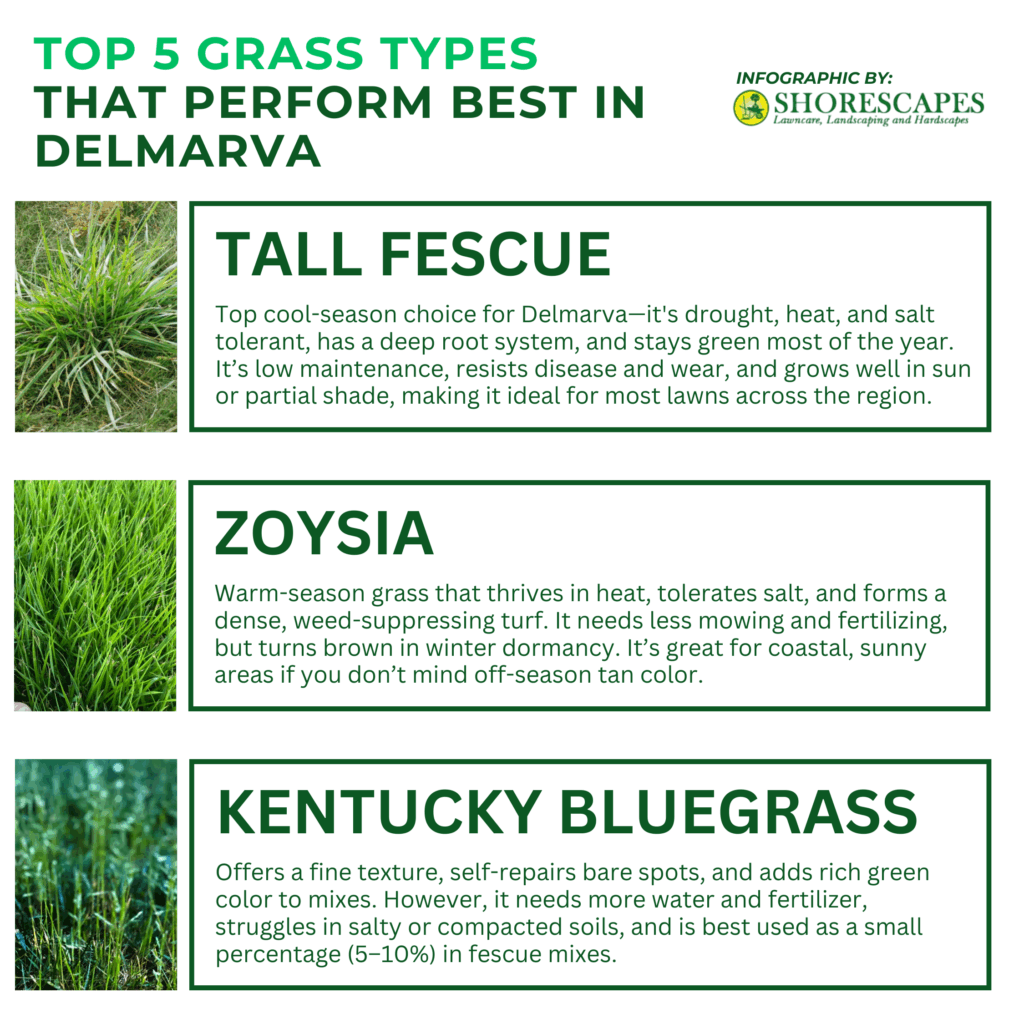
Top 5 Grass Types That Perform Best in Delmarva
Choosing the right grass is key to a healthy, low-maintenance lawn in Delmarva’s unique climate. From sandy coastal soils to hot, humid summers, not all turf types thrive equally here. Here are the top 5 grass varieties that stand out for durability, beauty, and regional performance.

How to Choose the Right Grass for Your Property
Every lawn is a bit different. To pick the perfect grass for your property, start by evaluating these factors:
- Sun vs. Shade: Observe how much sunlight your yard gets. If you have full sun all day, durable grasses like tall fescue, Bermuda, or zoysia will flourish. For shady areas (beneath trees or north sides of the house), a shade-tolerant fine fescue mix will perform best. Tall fescue can handle some shade as well, whereas Bermuda and bluegrass demand plenty of sun. You might even plant different grass types in different zones of your yard according to the microclimates.
- Soil Type and Drainage: Determine if your soil is sandy and fast-draining or heavier and moisture-holding. Deep-rooted grasses like tall fescue are better for sandy, drought-prone soils, since they can reach water deep down. Fine fescues handle sandy or low-fertility soil too. If your soil is often water-logged or clay-heavy, ensure you choose a grass that tolerates periodic wet feet – tall fescue has some tolerance for wet conditions, whereas something like Bermuda prefers it dry. Always consider doing a soil test and amending your soil (with organic matter or adjusting pH) to help your new lawn thrive.
- Intended Use (Traffic and Aesthetics): Think about how you use your lawn. Do kids or pets play on it frequently, or is it mostly for looks? For high-traffic family yards, a tough grass with good recuperative ability is crucial. Turf-type tall fescue mixed with a bit of Kentucky bluegrass is a great choice for durability – the fescue provides toughness and the bluegrass helps fill in wear spots. Bermuda grass is another option for a play-heavy lawn because it self-repairs quickly, but remember it will be brown in the off-season. If, on the other hand, your lawn is more ornamental or low-use, you might prioritize appearance or low maintenance. A fine fescue blend can give a pretty, wispy meadow look in low-traffic areas, or a pure zoysia lawn could provide a plush, weed-free appearance in summer with minimal upkeep.
- Maintenance Commitment: Be honest about the level of maintenance you’re willing to provide (watering, mowing, fertilizing). Choosing a grass suited to your maintenance style will save a lot of hassle. For example, if you want a low-maintenance lawn, lean toward grasses like zoysia or fine fescue that need less fertilization and mowing. If you don’t mind regular upkeep and you want a year-round green carpet, a tall fescue (cool-season) lawn might be your best bet – it will need occasional summer watering and fall feeding to stay thick. Remember, no lawn is zero maintenance, but a well-chosen grass will make maintenance much easier.
Expert Tip – Why Professional Installation Matters
Once you’ve picked the right turfgrass, proper installation and establishment are critical. This is where professional help can make a difference. Certified lawn care professionals and installation experts bring experience and knowledge that can save you time – and potentially save your lawn from costly mistakes. For example, professionals know how to properly prepare the soil (through grading, aeration, soil amendments), select high-quality seed or sod of the best cultivars, and ensure it’s installed at the right time of year. They understand how plants grow and what it takes to create an attractive lawn, so you don’t have to guess at the correct seeding techniques or timing.
Read here to know more about Proper Lawn Care in Delmarva.
Another big advantage is in maintenance know-how. Experts will tailor a fertilization and watering schedule for your specific grass and soil, and they can apply treatments precisely and safely. This reduces the risk of environmental harm from improper application of fertilizers or pesticides by inexperienced homeowners. In a coastal area, that’s important – you want to protect our bays and groundwater from excess chemicals. A professional crew will also have access to specialized equipment (for example, slit seeders, calibrated spreaders, or sod cutters) and products not readily available retail. All of this means your new lawn gets off to the best possible start and stays healthy long-term. While DIY lawn projects can be rewarding, consider consulting a lawn care professional for the installation phase or for periodic expert maintenance – it can ensure your investment in that perfect Delmarva lawn truly pays off.
Conclusion
A beautiful, resilient coastal lawn is definitely achievable when you choose the right turfgrass. We’ve reviewed the top-performing grasses in Delmarva – from the ever-reliable tall fescue to hardy warm-season zoysia, versatile Kentucky bluegrass, tough-as-nails Bermuda, and shade-loving fine fescue. Each has its strengths and ideal use-case, and by matching those traits to your property’s conditions, you can create a lawn that stays green and healthy with minimal headaches.
Remember that our unique coastal climate means balancing summer heat and humidity against winter cold, so no single grass is perfect year-round. But with informed choices (and maybe a custom mix of grass types), you’ll be well on your way to a thriving lawn that can handle whatever Mother Nature throws at it. Here’s to greener coastal yards across Delmarva!
Ready to transform your Delmarva lawn with the right turfgrass? Contact Shorescapes today for expert recommendations and professional lawn care services.
FAQs
Q: What’s the difference between warm-season and cool-season grasses, and which is better for Delmarva?
Cool-season grasses (like tall fescue and bluegrass) stay green longer in Delmarva but need extra care in summer. Warm-season grasses (like zoysia) handle summer heat well and use less water, but turn brown in winter. Choose based on what matters more to you—year-round green or low-maintenance summer durability.
Q: Are there grasses that can handle salt air and seaside conditions?
Yes—if your lawn is near the beach or exposed to salt spray, choose salt-tolerant grasses. Zoysia is one of the best for coastal areas, with Bermuda also performing well. Tall fescue has moderate tolerance, especially newer cultivars. Avoid Kentucky bluegrass and ryegrass in salty environments, as they’re more sensitive. After salt exposure, rinse the lawn with fresh water to protect the roots and reduce salt stress.
Q: When is the best time to plant or reseed a lawn in the Delmarva region?
For cool-season grasses in Delmarva, early fall—especially September—is the best time to seed or overseed. Warm soil and cooler air help grass establish strong roots. You can also lay sod in early fall or spring. For warm-season grasses like zoysia or Bermuda, late spring (May–June) is ideal. Avoid planting during summer heat or winter cold, and always prep the soil and keep new lawns well-watered during establishment.
Q: Can I mix different types of grass in my lawn?
Absolutely—mixing grass types is often recommended. In Delmarva, blends like tall fescue with a small amount of Kentucky bluegrass work well: fescue handles heat and drought, while bluegrass fills in bare spots. For shady areas, fine fescue mixes provide better coverage and disease resistance. Just avoid mixing cool- and warm-season grasses, as their growth cycles clash. Stick to compatible varieties and choose a mix suited to your yard’s light conditions for a thicker, healthier lawn.
Q: Is professional lawn installation worth it for coastal lawns?
If you want the best results or aren’t confident in DIY lawn care, hiring pros can be a smart move—especially in coastal areas with sandy soil, salt, and drainage challenges. Professionals handle grading, soil prep, grass selection, and proper seeding or sod installation. They also apply fertilizers correctly, avoiding common mistakes. While DIY is possible with the right guidance, a pro-installed lawn typically establishes faster and runs into fewer issues. Even then, ongoing maintenance is still key, whether you do it yourself or hire help.